
The Inflammatory Thread in Neurological Disease
Parkinson’s tremors. Alzheimer’s memory loss. MS flare-ups. Epileptic seizures.

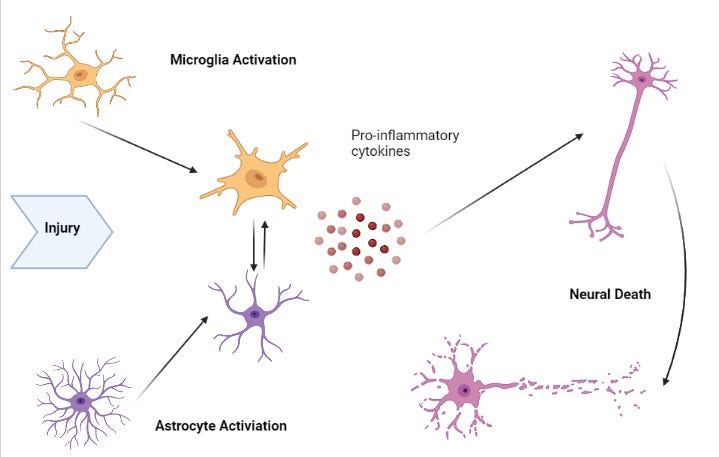
Each disorder looks distinct on the surface, yet beneath the symptoms lies a shared biological storm: neuroinflammation.
Across these conditions, the brain’s immune cells, microglia and astrocytes, play a double-edged role. In small doses, inflammation helps repair damage. But when it persists, it turns destructive, releasing toxic molecules that erode neurons and fuel a vicious cycle of degeneration. Misfolded proteins like α-synuclein, β-amyloid, and tau only add fuel to the fire, keeping these immune cells locked in overdrive.
Together, chronic inflammation and protein misfolding form a molecular feedback loop that slowly dismantles the brain from within a shared mechanism linking diseases once thought worlds apart.
The Brain’s Immune Landscape
The brain has its own immune ecosystem, an intricate network of microglia and astrocytes that balance defense with delicate control.
Microglia are sentinels: in their resting state, they prune synapses, clear debris, and keep neurons healthy. But when injury or misfolded proteins appear, they release cytokines and chemokines meant to contain damage. If the alarm stays on too long, those same molecules become toxic, fueling oxidative stress and neuronal loss.
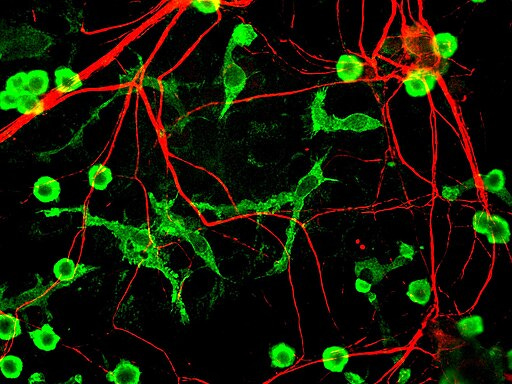
Astrocytes, the most abundant glial cells, maintain the blood–brain barrier, regulate nutrient exchange, and communicate with neurons. Under stress, though, they turn reactive, producing inflammatory mediators that amplify damage. Their dialogue with microglia forms a feedback loop, activated microglia push astrocytes into neurotoxic “A1” states, while astrocytes sustain microglial activation. When this loop persists, inflammation shifts from protective to pathological.
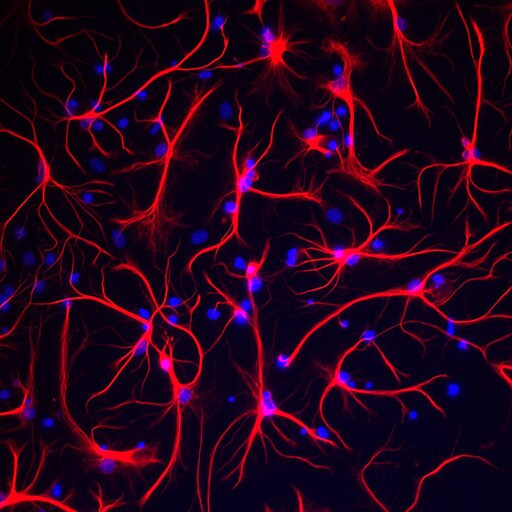
Chronic activation of these glial partners is now recognized as a core feature of diseases like Alzheimer’s and multiple sclerosis, where signals meant to heal instead erode myelin and neurons. The challenge for modern neuroscience is to harness their protective power without letting the fire burn unchecked. When microglia and astrocytes stay in balance, they sustain life. When they don’t, they light the match for neurodegeneration.
When Proteins Go Rogue
At the heart of many brain disorders lies a molecular misstep: a protein that loses its shape. When β-amyloid, tau, or α-synuclein misfold, they clump into toxic aggregates that the brain struggles to clear. These tangled proteins aren’t passive by-products, they spark an immune alarm that recruits microglia and astrocytes into action.
In Alzheimer’s, β-amyloid plaques disrupt synapses and trigger microglial activation; in Parkinson’s, α-synuclein aggregates form Lewy bodies that provoke the same immune cascade. What begins as cleanup soon becomes self-defeating: microglia release cytokines and reactive oxygen species to destroy debris, but the response damages nearby neurons and fuels even more misfolding.
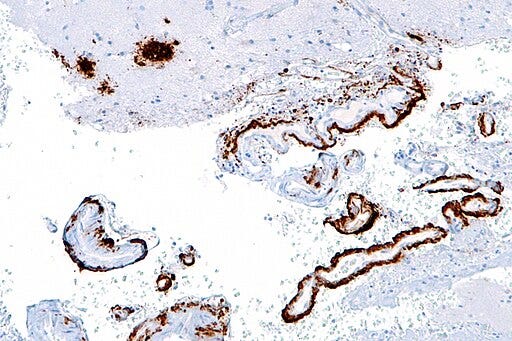
This feedback loop, misfolding begets inflammation, and inflammation drives further misfolding, creates a slow-burning fire in the brain. Emerging research suggests that modulating this immune response or enhancing aggregate clearance may interrupt the cycle. The goal isn’t to silence the immune system but to retrain it, restoring the balance between protection and precision that defines a healthy brain.
Shared Pathways Across Disorders
Though Parkinson’s, Alzheimer’s, multiple sclerosis, and epilepsy appear distinct, they converge on the same cycle: protein misfolding leads to immune activation, which leads to neurodegeneration.

In Parkinson’s disease, misfolded α-synuclein aggregates into Lewy bodies that alarm microglia, prompting the release of TNF-α, IL-1β, and other inflammatory mediators that accelerate dopaminergic neuron loss in the substantia nigra. Alzheimer’s follows a similar pattern, β-amyloid plaques and tau tangles provoke a prolonged microglial response. Variants in TREM2 impair microglial clearance of these aggregates, linking genetic risk to chronic inflammation and synaptic decline.
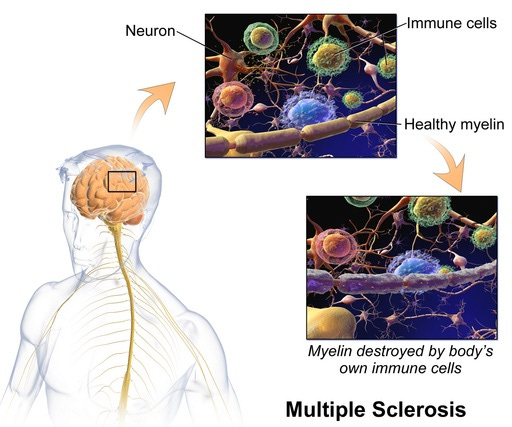
In multiple sclerosis, misfolded myelin basic protein acts as a neoantigen, triggering autoimmune activation that strips myelin and injures neurons. Epilepsy reveals the feedback from the opposite direction: recurrent seizures induce microglial and astrocytic cytokine release that heightens neuronal excitability, lowers seizure thresholds, and remodels synapses.
Across these conditions, the pattern repeats, misfolded proteins or hyperactive neurons awaken immune cells that, when left unchecked, erode the very networks they were meant to protect. Understanding this shared inflammatory language offers a roadmap for therapies that calm, rather than silence, the brain’s defenses.
The Cycle of Destruction
Inflammation and protein aggregation feed each other in a destructive loop that underpins many neurodegenerative diseases. Misfolded proteins like β-amyloid in Alzheimer’s and α-synuclein in Parkinson’s activate microglia and trigger the release of TNF-α and IL-1β, generating reactive oxygen species (ROS) that damage neurons and promote further misfolding. Rising oxidative stress impairs mitochondrial function, depleting the energy neurons need to survive. Meanwhile, disrupted proteostasis, the balance between protein synthesis, folding, and degradation, prevents the brain from clearing these aggregates, overwhelming chaperone proteins and perpetuating cellular stress.
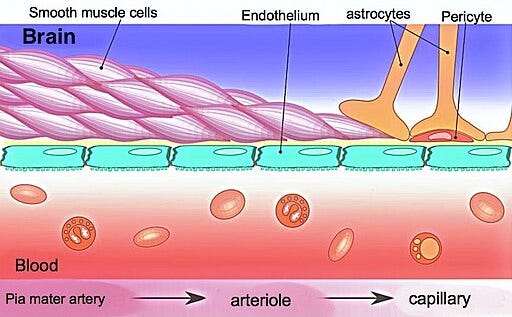
As inflammation persists, the blood–brain barrier (BBB) begins to weaken. Once compromised, it allows peripheral immune cells and cytokines to flood the brain, amplifying local inflammation and neuronal injury. The result is a self-reinforcing storm: inflammation drives misfolding, misfolding fuels oxidative stress, and a leaky BBB ensures the cycle continues unchecked. Breaking this loop, by stabilizing mitochondria, restoring proteostasis, or reinforcing BBB integrity represents a critical frontier in neurodegenerative research.
Calming the Fire Within
Across Parkinson’s, Alzheimer’s, multiple sclerosis, and epilepsy, the same biological fault lines appear: misfolded proteins, hyperactive immune cells, and chronic inflammation that erode the brain from within. What was once seen as coincidence now reads as convergence, variations of the same cellular war, fought between the brain’s need for protection and its struggle for balance.
Yet this shared biology also offers shared opportunity. By targeting the inflammatory feedback loop, restoring proteostasis, and modulating microglial activation, researchers are beginning to chart a new course. The goal isn’t to silence the brain’s defenses, but to re-educate them, transforming destructive inflammation back into repair.
Neuroinflammation, once viewed as a side effect, is now recognized as a central driver and potentially the key to prevention. The challenge for the next decade is not simply to understand these shared mechanisms, but to translate that understanding into interventions that protect the brain before damage becomes irreversible. The path forward lies in calming the fire, not extinguishing it.